
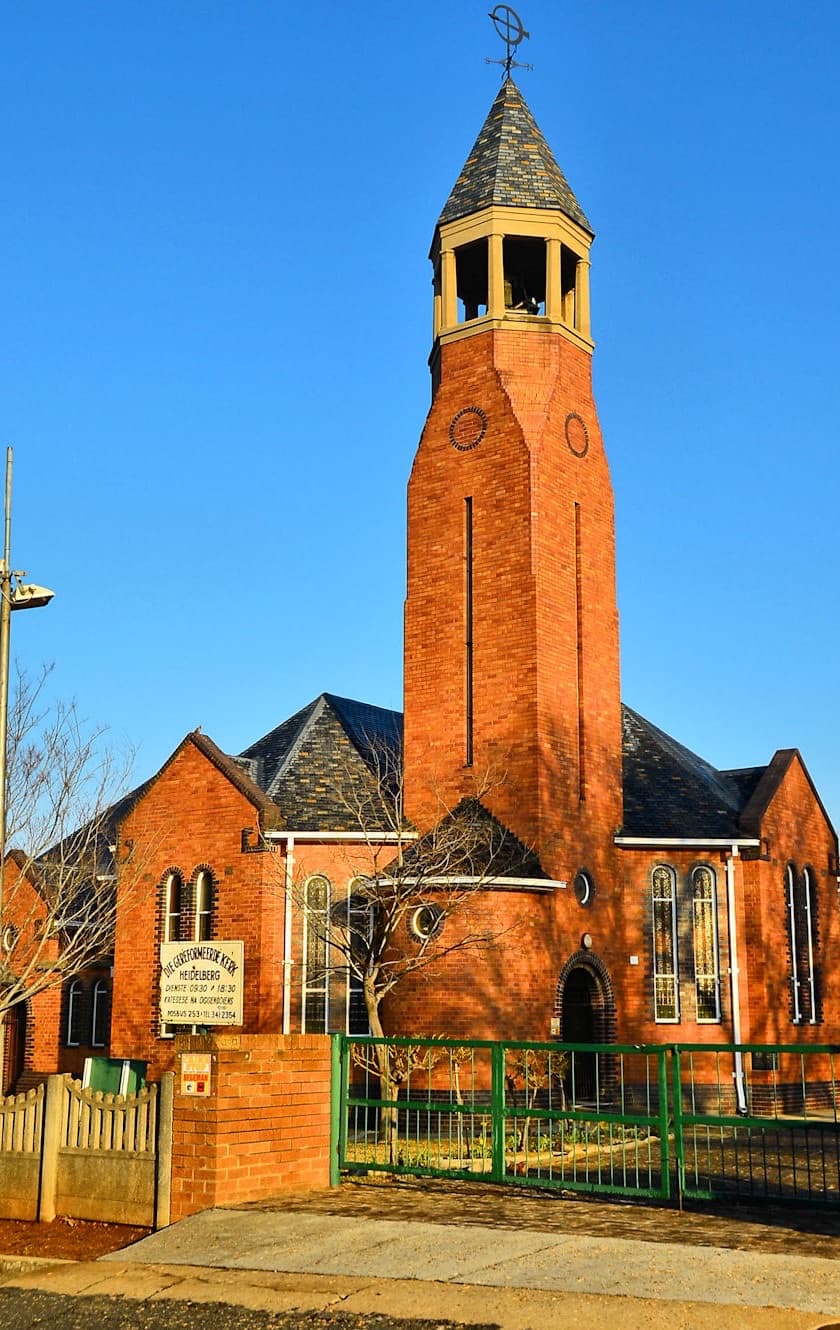
A home visit is the pastoral visit of an elder to a household in its own home. Prepare it with your district list and the last notes. Lead it with Scripture and prayer, listen more than you talk, and write a short note within 24 hours.
Continental Reformed churches call it family visitation or home visitation (huisbesoek in Afrikaans churches). Presbyterian books of church order ask the elders to visit the people at their homes. This guide is for elders in both families of churches.
Contents10 sections
What is a home visit, and why does the elder do it?
The root is in Scripture. Paul taught the church at Ephesus "publickly, and from house to house" (Acts 20:20, KJV). Paul told its elders to "take heed therefore unto yourselves, and to all the flock" (Acts 20:28). Peter tells the elders: "Feed the flock of God which is among you, taking the oversight thereof" (1 Peter 5:2).
The church orders write this task down. The continental family descends from the Church Order of Dort (1618–1619). Its art. 23 tells the elders to visit the homes before and after the Lord's Supper, as circumstances allow, to comfort and instruct the members. The Presbyterian family descends from the Westminster Form of Presbyterial Church-Government (1645). The Form gives the elders a share in the government of the church, but it does not describe a visit. The modern Presbyterian books add the visit to the elder's duties.
Each federation numbers its own order. Check the current text of your own order.
| Church order | Article | What it says about the visit |
|---|---|---|
| Church Order of Dort (1619) | art. 23 | House visitation before and after the Lord's Supper, as circumstances allow |
| GKSA, South Africa (Kerkorde, 2015 print) | art. 23 | Almost a translation of Dort art. 23 |
| Canadian Reformed Churches (2025) | art. 22 | "faithfully to visit the members of the congregation in their homes" |
| United Reformed Churches in North America (10th edition) | art. 14 | "visit the members of the congregation according to their needs, engage in family visiting" |
| Orthodox Presbyterian Church, Form of Government | ch. X, sec. 3 | "They should visit the people, especially the sick" |
| Presbyterian Church in America, Book of Church Order (2026) | 8-3 | "They should visit the people at their homes, especially the sick" |
| Igreja Presbiteriana do Brasil, Constituição | art. 51 | The elder helps the pastor "no trabalho de visitas" (in the work of visits) |
Some churches also have practical guidance. The Handleiding by die Kerkorde (1965), a commentary on the GKSA order, calls the home visit official, but private and confidential (p. 147).
Many churches give each elder a district of households (a ward, or wyk). In the GKSA, a synod decision asks each elder to give account of the ward to the council from time to time (Acta 1952:220-221). The post on what the church order asks of the council covers the other duties of the office.
How often must an elder visit?
None of the orders in the table sets a number of visits per year. Dort and the GKSA tie the visit to the Lord's Supper, before and after it. Dort art. 63 sets the Supper every two months where possible. The GKSA (art. 63), Canadian Reformed (art. 60) and URCNA (art. 46) orders say at least every three months. Many churches aim to visit every household once a year: that is a practice, not a rule.
The OPC and PCA texts say "especially the sick". Keep a short, separate list of the sick, the old and the lonely, and visit them more often. In continental churches, the church visitors of the classis can ask about the visits. The post on church visitation explains how a council prepares.
How do you prepare for a home visit?
Do these steps before each visit:
- Open the district list. Find the households that had no visit since the last Lord's Supper, or this year.
- Read the last notes about the household. Look for a matter that you promised to follow up.
- Check the open follow-ups for the household. Close the follow-ups that are done.
- Make an appointment. Tell the household who will come.
- Choose a Scripture passage. Choose one that fits what you know of the household, or one that prepares for the Lord's Supper.
- Pray for the household and for the visit.
- Ask a second office-bearer to come with you, if your church does that.
The church orders in the table do not ask for two visitors. The OPC text says that the elders lead the church "individually and jointly with the pastor in the session" (FG X.3). Some churches send two elders, or an elder and a deacon. The GKSA order asks the deacons to visit all the members (art. 25). The Canadian Reformed order asks them "to acquaint themselves with existing needs and difficulties" (art. 23). Follow the decision of your council.
How do you lead the visit?
A simple order helps a new elder.
Caution: do not promise to keep everything secret. If a person tells you that someone is in danger, you must get help. Say this before the person tells you more.
The law can also require a report. In South Africa, the Children's Act names a "minister of religion" and a "religious leader" among those who must report child abuse (s110(1)). In the United States, about 29 states and Guam name clergy as mandatory reporters (Child Welfare Information Gateway, 2023). Ask an adviser whether the rule covers elders.
- Greet each person by name, the children too. Say why you came.
- Read the Scripture passage, at the start or at the end, as your church does.
- Ask open questions. Let the people talk, and listen more than you talk.
- Talk about faith, the household, the church and work.
- Speak to the children in words that they understand.
- End with prayer. Pray for the matters that the household told you about.
Good questions for a home visit
Choose a few questions. A home visit is a conversation, not an interview.
- Faith: How do you see God's care in your life now? Which part of the Bible do you read now, and what did you learn from it? How do you prepare for the Lord's Supper?
- The household: How do you pray and read the Bible together? What is good in your marriage now, and what is difficult? Who in the household needs extra care?
- The church: Where do you feel at home in the church, and where not? How does the sermon help you during the week? Is there a person in the church whom you can help?
- Work and daily life: How is your work? What pressure do you carry? How do you use your time and your money for the Lord?
- The children: What do you learn at catechism? Which Bible story do you like most, and why? What do you pray for?
What must an elder not do?
- Do not talk about other members. Do not tell other people what you heard in the home.
- Do not talk about matters of the council, such as discipline. The Handleiding warns that the church can suspend an office-bearer who talks loosely about discipline (p. 442).
- Do not promise to keep a secret that you cannot keep (see the caution above).
- Do not write notes in front of the family, unless they agree.
What must an elder do after the visit?
- Write a short note within 24 hours. Write facts, not opinions.
- Choose who may read the note. Choose the smallest group that needs to know.
- Record a follow-up if you promised one, such as a second visit or a call.
- Ask the household first, then tell the deacons about a material need.
- Ask consent before you write a health detail in the note.
- Give the council the facts that it needs, from time to time. Keep the rest within the small group that cares for the household.
Step 5 is good practice everywhere. The law behind it differs by country:
- South Africa: POPIA s32 does not list religious bodies among those who may process health data. So consent is the evident route (an interpretation of the Act).
- The EU and the UK: the GDPR lets a not-for-profit body with a religious aim process its members' health data with safeguards (Art. 9(2)(d)). Explicit consent is another route (Art. 9(2)(a)).
- Brazil: the LGPD asks for specific, highlighted consent for health data, unless a listed exception applies (Art. 11).
- The United States: HIPAA covers health plans, clearinghouses and certain health care providers (45 CFR 160.102). A church that is none of these is outside HIPAA. State law differs.
Ask an adviser in your own country. The post on pastoral notes and visit records explains what to write, who may read it, and the law in more detail.
A home-visit checklist to print
| When | What to do | Done |
|---|---|---|
| Before | Check the district list: who had no visit since the last Lord's Supper? | ☐ |
| Before | Read the last notes and the open follow-ups for the household. | ☐ |
| Before | Make an appointment. Ask a second office-bearer, if your church does that. | ☐ |
| Before | Choose a Scripture passage. Pray for the household. | ☐ |
| During | Greet each person by name, the children too. Say why you came. | ☐ |
| During | Listen more than you talk. Ask about faith, the household, the church and work. | ☐ |
| During | Speak to the children. Write no notes unless the family agrees. | ☐ |
| During | Read the passage. End with prayer. | ☐ |
| After | Write the note within 24 hours. Choose who may read it. | ☐ |
| After | Record the follow-up. Ask consent before you tell the deacons of a need or write a health detail. | ☐ |
| After | Give account to the council from time to time. | ☐ |
How Reformeer supports the home visit
Kantoor, the office app of Reformeer, keeps the district and its visits in one place. Reformeer calls a district a ward, and its screens are in English and Afrikaans. See the office features.
- Day overview: "Not yet visited". The Day overview lists the households in your own wards that have no visit note this church year. Reformeer counts the church year from 1 April.
- The ward list. An elder or a deacon sees the members of their own wards.
- Triage. The Triage tab shows the open follow-ups, the households with "No recent contact", and the households "Longest since contact".
- The Visit note. After the visit, write a note of the kind Visit. Under "Who can see it?", choose "Elders only" (the ward's elders and the pastors) or "Elders and deacons" (adds the ward's deacons).
- The follow-up. Answer "Follow-up needed?" and choose an action: Home visit, Hospital, Call, Message or Other. The note stays in the "Follow-ups" filter until someone marks it done.
- The ward report. Under Report, the Ward report gives an AI summary of the notes for a period that you choose, as a PDF, with catechism attendance. Read the summary before you give it to the council.
A visit counts only when you write a Visit note. Until then, the household stays on the "Not yet visited" list.
The limit: a follow-up has no due date and no reminder. Open the "Follow-ups" filter yourself, for example each week. The ward report is also not automatic: you ask for it. To see it with your own wards, book a demo.
Dorrepaal family
Wonderful visit. We read together from Psalm 121. The family is at home and will partake in communion on the 21st.
Frequently asked questions
How often must an elder do a home visit?
None of the church orders in this post sets a number. Dort and the GKSA order ask for visits before and after the Lord's Supper. The OPC and PCA texts ask for visits, especially to the sick.
Must two elders go on a home visit?
No church order in this post asks for it. Some churches send two office-bearers: follow the decision of your council.
Must the elder read Scripture and pray at every visit?
The church orders do not set the form. The GKSA Handleiding says that Scripture and prayer must not be absent (p. 147). Choose a short passage that fits the household.
Must an elder report child abuse that they hear about on a visit?
It depends on your country. The South African Children's Act (s110(1)) and about 29 US states name ministers or clergy as reporters. Ask an adviser whether the rule covers elders.
Published on 23 October 2026. Topic: Pastoral care.